A tree company makes more money removing a tree than keeping it. That is worth knowing when someone tells you the big oak has to go. Most of the time it does not, and we would rather be the crew that kept it standing.
What a healthy-tree visit looks like
Corey walks the property with you and looks at the trees you are worried about from the roots up. Soil and root flare. Trunk for cracks, cavities, fungus, and old wounds. The unions where big limbs meet the trunk. The canopy for deadwood, thinning, and limbs that are too long for their attachment. Then he tells you what he sees in plain language, what is normal for that species, what is a problem, and what, if anything, to do about it this year.
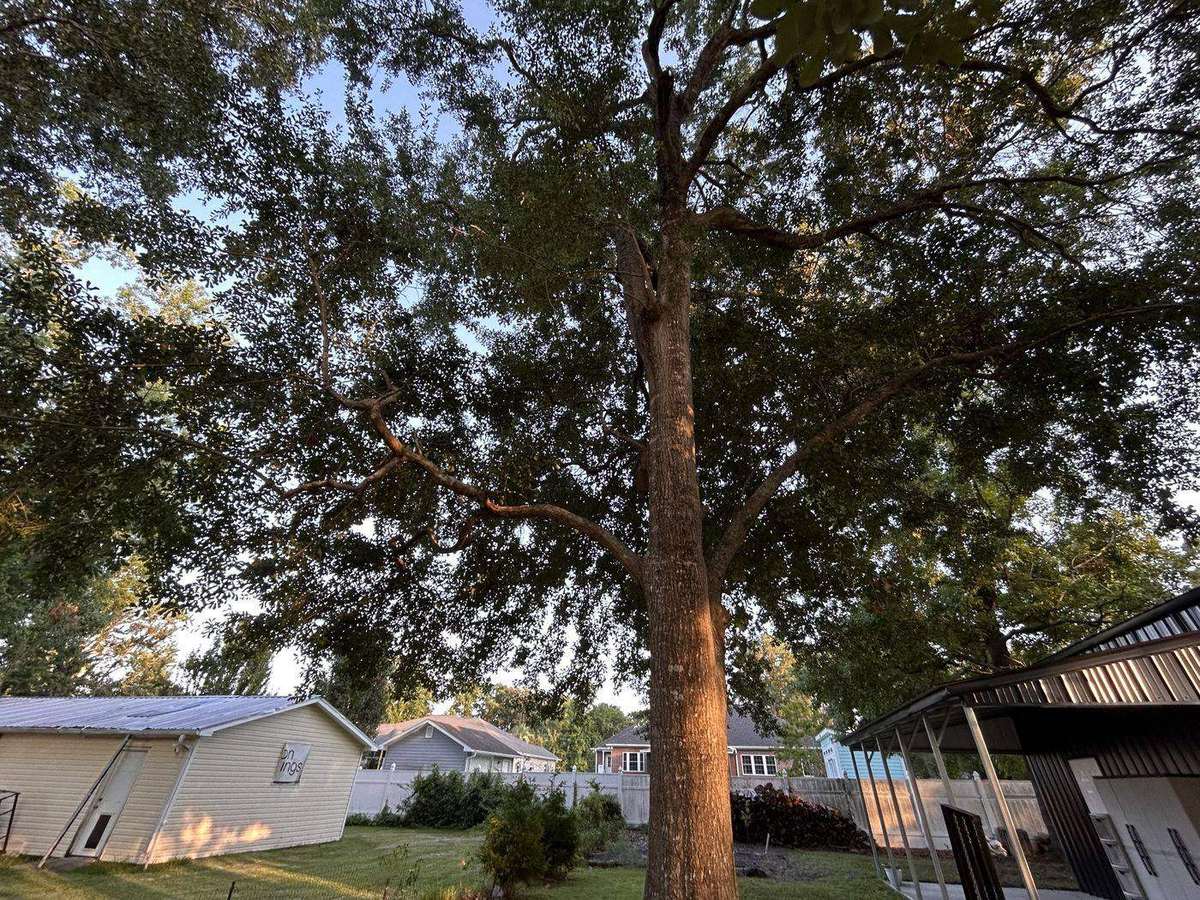
Sometimes the answer is nothing. A live oak with a lean it has had for fifty years and a full canopy is a healthy tree that happens to lean. A trunk cavity that has been there for decades and has sealed edges is often fine. We will tell you when to leave a tree alone.
Structural pruning
The single best thing you can do for a big tree is manage its structure. That means removing deadwood before it drops, taking weight off the ends of over-long limbs so they do not tear out of the trunk, thinning where the canopy is dense enough to catch wind like a sail, and taking out crossing or rubbing limbs. On young trees it means picking a leader and removing the competing one so the tree does not grow into a split fork that fails at forty years old.
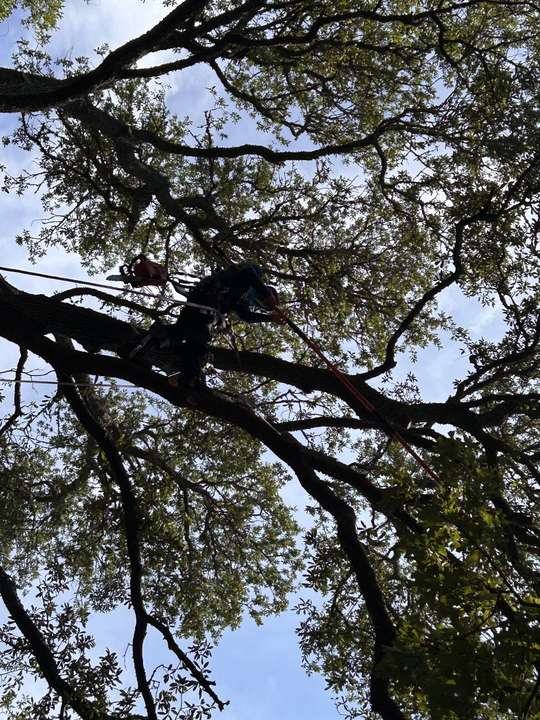
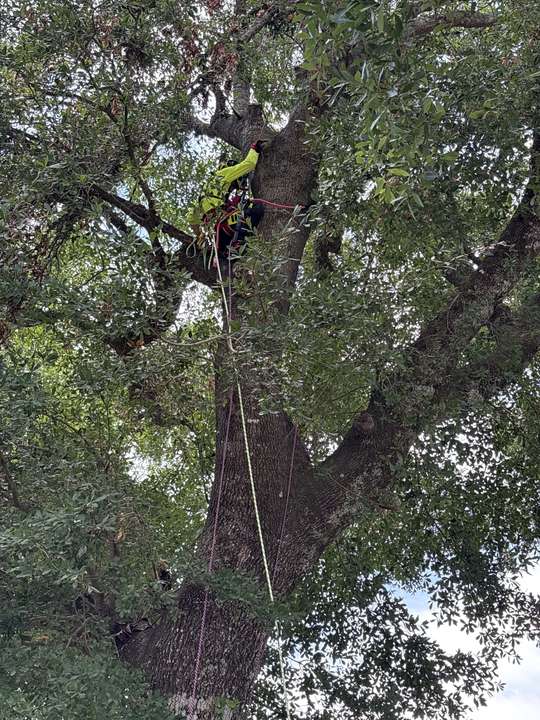
All of this is done by a climber making each cut at the branch collar, so the tree seals over. Read more about how we prune on the trimming and pruning page.
Signs a tree is in trouble
- A canopy that thinned out over a single season, or leaves that are small and sparse compared with last year.
- Mushrooms or shelf fungus growing from the trunk or the root flare. That is rot inside.
- A crack or a seam where two trunks meet, especially one that opens and closes in the wind.
- Sawdust, holes, or oozing on the trunk, which points to borers or disease.
- A new lean, or soil lifting on one side of the base.
- Dead limbs appearing faster than you can keep up with them.
Any of these is a call, not a wait-and-see. Some can be managed. Some mean the tree is a hazard and belongs on the removal page. Either way you will get a straight answer.
Live oaks and the coast
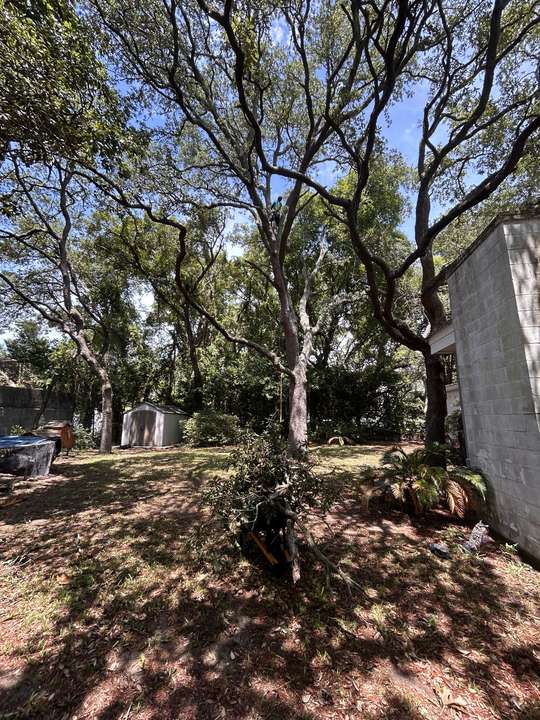
Coastal live oaks are the toughest trees on the Grand Strand. They shrug off salt wind, they bend in hurricanes instead of snapping, and they live for centuries when nobody tops them. The threats to a live oak are almost always people: construction cutting through the roots, soil piled against the trunk, a driveway poured over the root zone, or a bad pruning job. If you are building an addition, a pool, or a driveway near a big oak, call before the equipment shows up. Protecting the roots then is far cheaper than removing a dying tree in five years.
What we do not do
We are not a spraying or fertilizing company, and we do not do deep-root injections or cabling systems. If a tree needs a diagnosis beyond what we can see or a treatment we do not offer, we will tell you and point you toward the right specialist rather than sell you something.