A good trim is one you barely notice from the street and notice every day from the house: no more limbs scraping the shingles, no more gutters full of oak leaves, more light on the lawn, and a tree that will still be standing after the next hurricane season.
What trimming fixes
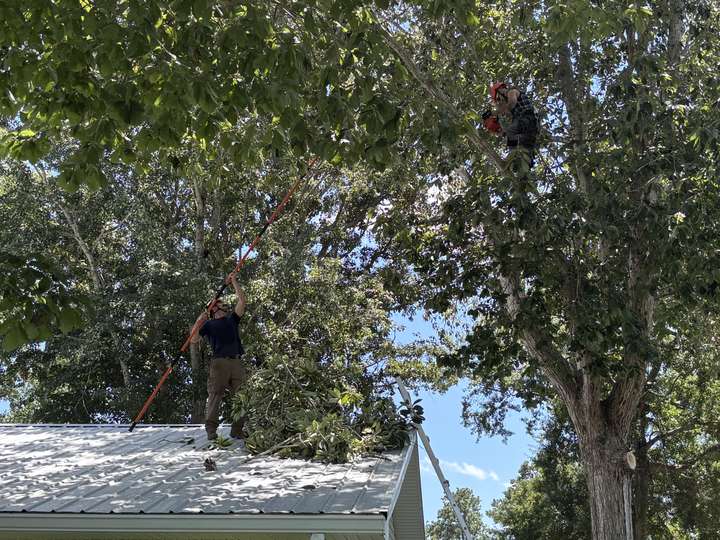
- Limbs on the roof. Branches resting on or rubbing the roof wear through shingles, hold moisture against the decking, and give squirrels and rats a highway to the attic. We lift the canopy off the house with enough clearance that it stays off for years.
- Gutters that never stay clean. If you clean the gutters every month and they are full again in two weeks, the fix is in the tree, not the gutter.
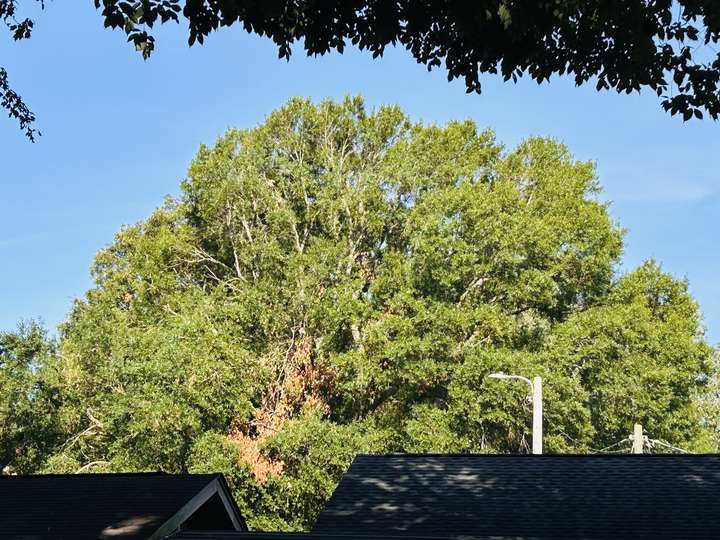
- Deadwood. Every mature oak carries dead limbs. They are the first thing to come down in a storm, and they do not need wind to fall. Removing deadwood is the single most useful thing you can do for a tree over a house, a driveway, or a place where kids play.
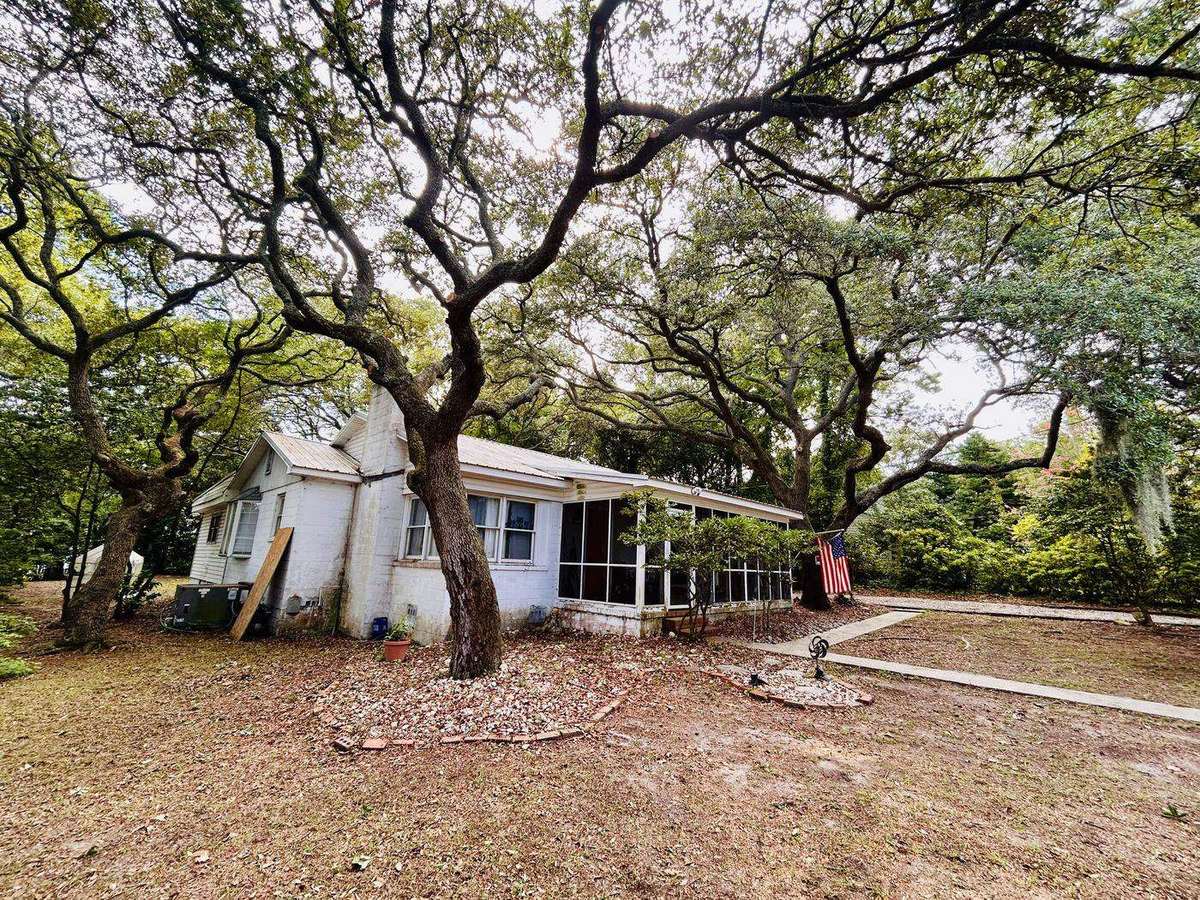
- Heavy limbs over the house. Live oaks grow long, low, horizontal limbs that weigh far more than they look. Reducing the weight at the ends of those limbs keeps them from splitting off at the trunk.
- Trees crowding the house or each other. Thinning a canopy lets wind through instead of catching it like a sail, and lets light reach the grass and the shrubs underneath.
- Young trees growing wrong. A few cuts on a young tree to remove crossing limbs and a competing leader saves a big removal twenty years from now.
How we prune
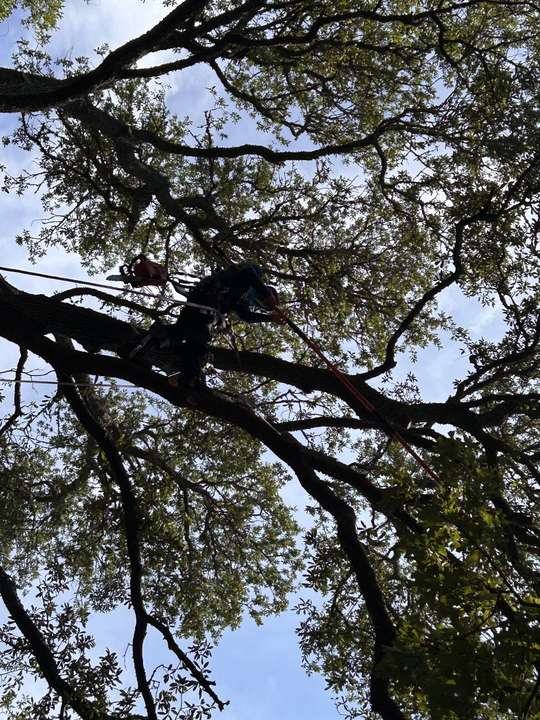
We climb. A climber on a rope can reach every part of a tree and make each cut in the right place, at the branch collar, so the tree seals over cleanly. That is not possible from a bucket on the street or with a pole saw from the ground, and it is the difference between a tree that heals and one that rots from the cut.
Two things we do not do. We do not top trees. Cutting the top off a tree leaves big wounds that rot and a burst of weak, fast growth that is more dangerous than what was removed. And we do not strip the inside of the canopy and leave tufts at the ends of the limbs. That looks tidy for a season and makes the limbs more likely to break. If you have had trees pruned that way in the past, we can usually correct it over a couple of seasons.
Every cut we make has a reason: clearance, weight reduction, deadwood, structure, or light. When we are done you should see the shape of the tree, not the shape of the work.
Live oaks, pines, and everything else on the Grand Strand
Live oaks are the tree people care most about here, and rightly. They are tough, they are long-lived, and they take pruning well as long as it is done with restraint. We prune for clearance over the roof and the driveway, remove deadwood, and reduce the ends of long limbs that overreach. Spanish moss and resurrection fern on the limbs are harmless and we leave them alone.
Pines do not need much pruning, but the dead lower limbs on a tall loblolly hang over a lot of houses in Carolina Forest and Socastee. Those come off. If a pine is leaning or the top is dying, that is a removal conversation.
Water oaks, laurel oaks, maples, sweetgums, magnolias, crepe myrtles, and pecans all respond well to structural pruning and deadwood removal. Crepe myrtles in particular are cut back far too hard by most crews. We prune them so they flower and keep their form.
When to trim
Deadwood and hazard limbs can come out any time of year. For heavier structural work on oaks, late winter before the spring flush is ideal, and the months right before hurricane season are a smart time to reduce weight over the house. We have more on timing in when to trim live oaks on the Grand Strand.
What it costs
Pruning is priced by the tree, based on its size, how much needs to come out, how much is over the house, and how much brush there is to haul. Corey looks at every tree in person and gives you a price before anything is scheduled. Everything we cut goes on the trailer and the yard is raked before we leave.