Most of the trees we remove are within a few feet of something that matters: a roof, a fence, a shed, a neighbor's driveway, the service line to the house. That is why we climb.
How a climbing crew takes a tree down
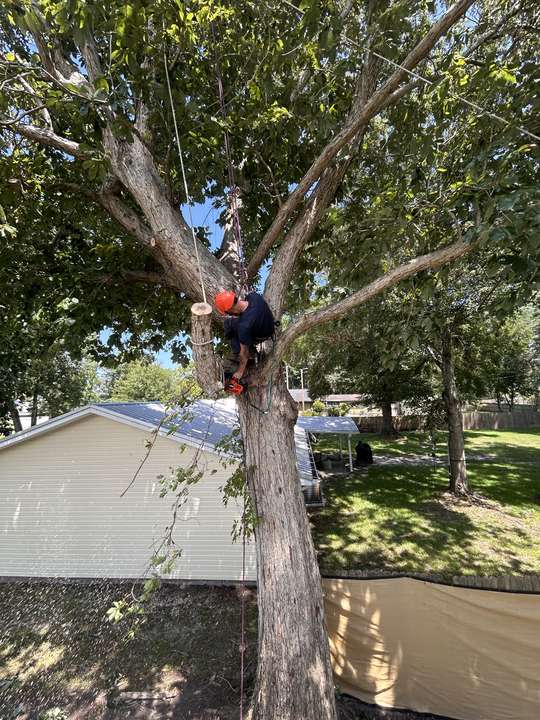
Dropping a tree whole works in a field. In a Conway or Myrtle Beach backyard there is rarely room for that, and a tree that is dead or storm-damaged does not always fall where you want it to anyway. So we take it apart from the top down.
A climber goes up on a rope, sets a rigging line above the cut, and lowers each limb and each section of trunk to a person on the ground who controls the descent. Pieces land on the lawn, on a tarp, or straight onto the trailer, not on the roof. It is slower than felling a tree in one go. It is also why your house, your fence, and your neighbor's azaleas are still standing when we leave.
When a tree is too rotten to climb safely, we bring in a compact tracked lift that fits through a standard gate and reaches over a two-story house. Either way, the tree comes down in controlled pieces.
Trees we take down most often
- Tall pines beside the house. Loblolly and longleaf pines in Carolina Forest, Socastee, and the older Myrtle Beach neighborhoods grow straight up to eighty feet and more, often planted or left a few feet from the foundation. They snap in hurricane-force wind and shed limbs every storm.
- Dead or dying oaks. A water oak or laurel oak that has lost most of its canopy is heavier and more brittle than it looks. These need rigging from the start, not a chainsaw at the base.
- Storm-split and leaning trees. After a blow, a tree with a lifted root plate or a split trunk is already on its way down. We remove these before the next front finishes the job. Read more on the storm damage cleanup page.
- Trees over the roof or the lines. Anything hanging over the house or the service drop gets rigged and lowered piece by piece. If the utility's own lines are involved, we will tell you when the power company has to make the first move.
- Trees in the way. Sometimes a tree is healthy and simply in the wrong spot for a pool, an addition, or a driveway. Those come down the same careful way.
What is included
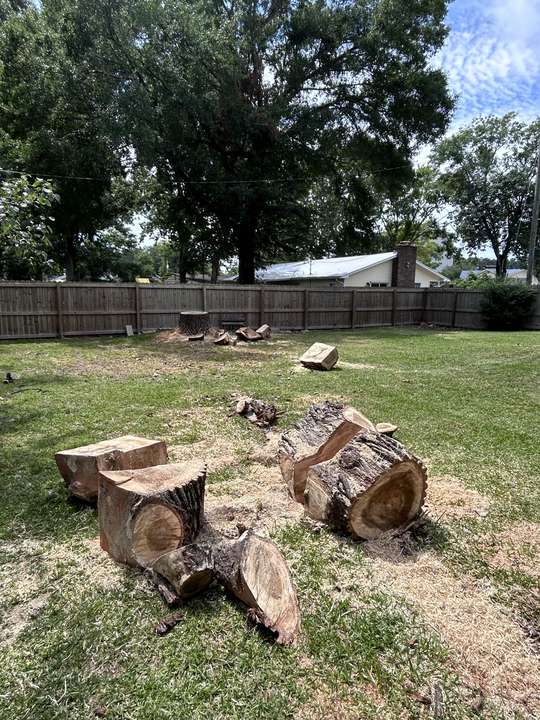
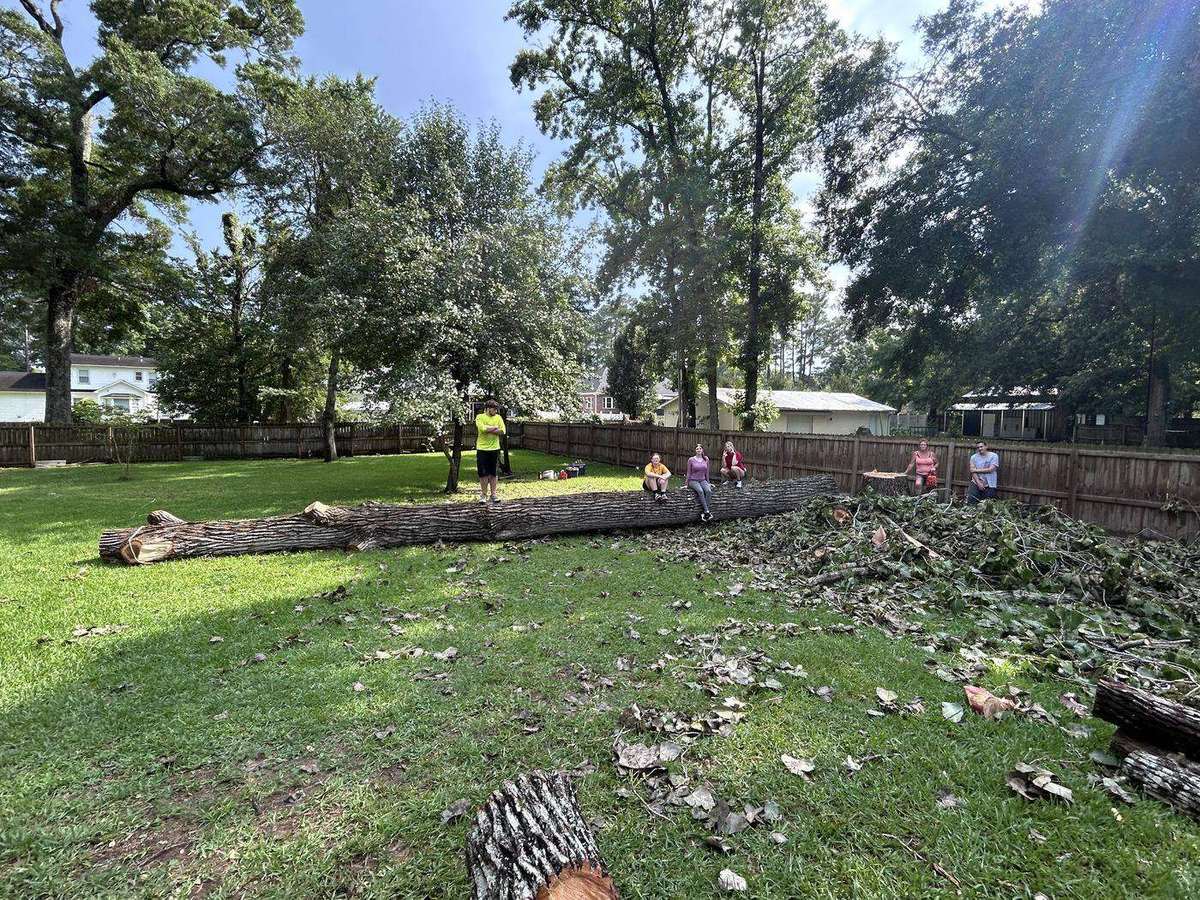
A removal with us includes the whole job, not just the cut. The tree comes down in pieces. Limbs and brush go on the trailer. The trunk is cut into rounds and hauled, or cut and stacked for you if you would rather keep it as firewood. The lawn gets raked. Several customers have told us it looked better than before we arrived, and that is the standard.
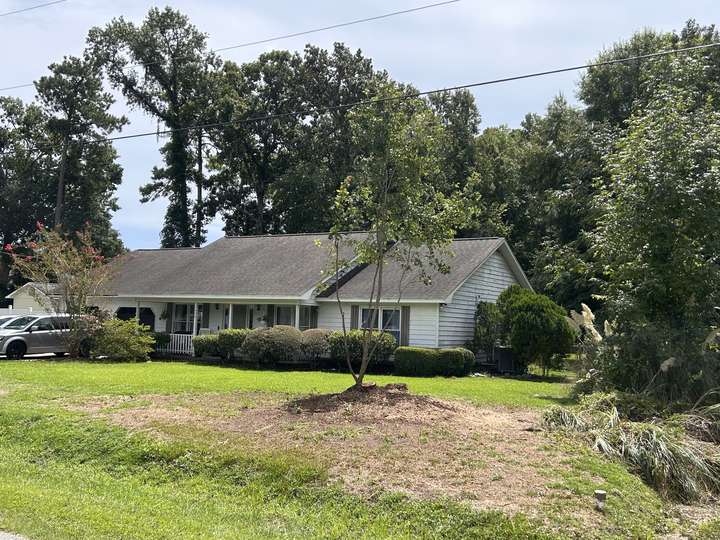
Stumps are left cut low to the ground. If you need the stump ground out, mention it when you call and Corey will tell you the options.
What it costs
There is no price list for tree removal because no two trees are the same job. What moves the price is the size of the tree, how close it is to your house, fences, and power lines, how much room the crew has to work, and how much wood has to be hauled. A leaning pine in an open side yard and a wide oak spread over two roofs are very different days.
Corey looks at every tree in person and gives you the number before anything is scheduled. Customers describe the pricing as fair and right on target, and the price you are quoted is the price you pay unless you change the scope of the job.
Does the tree actually need to come down?
Not always, and we will tell you when it does not. A live oak dropping limbs on the roof usually needs trimming, not removal. A big tree with a lean it has had for thirty years is usually fine. What worries us is change: a new lean, cracks in the soil around the base, a split where two trunks meet, fungus on the trunk, a canopy that thinned out over one summer. If you are seeing any of those, call and we will look.
If you want to keep a big tree healthy and safe for the long haul, see tree health and preservation.
Who does the work
Knot Leafing Around is Corey's crew. He looks at the tree, gives you the price, and is on the job. The climbers work in helmets, chaps, and hearing protection with rope systems and rigging gear built for exactly this. You will hear from us during the job, especially when we are working over your house or a neighbor's.
We are based in the Myrtle Beach area and remove trees across Horry County, from Conway and Carolina Forest down the coast to Murrells Inlet and up to Little River.