
When to trim live oaks on the Grand Strand, and what not to do
Live oaks are the best thing about a coastal South Carolina yard, right up until a limb is resting on the roof. Here is when to prune them, what to take, and the two things that will wreck one for good.
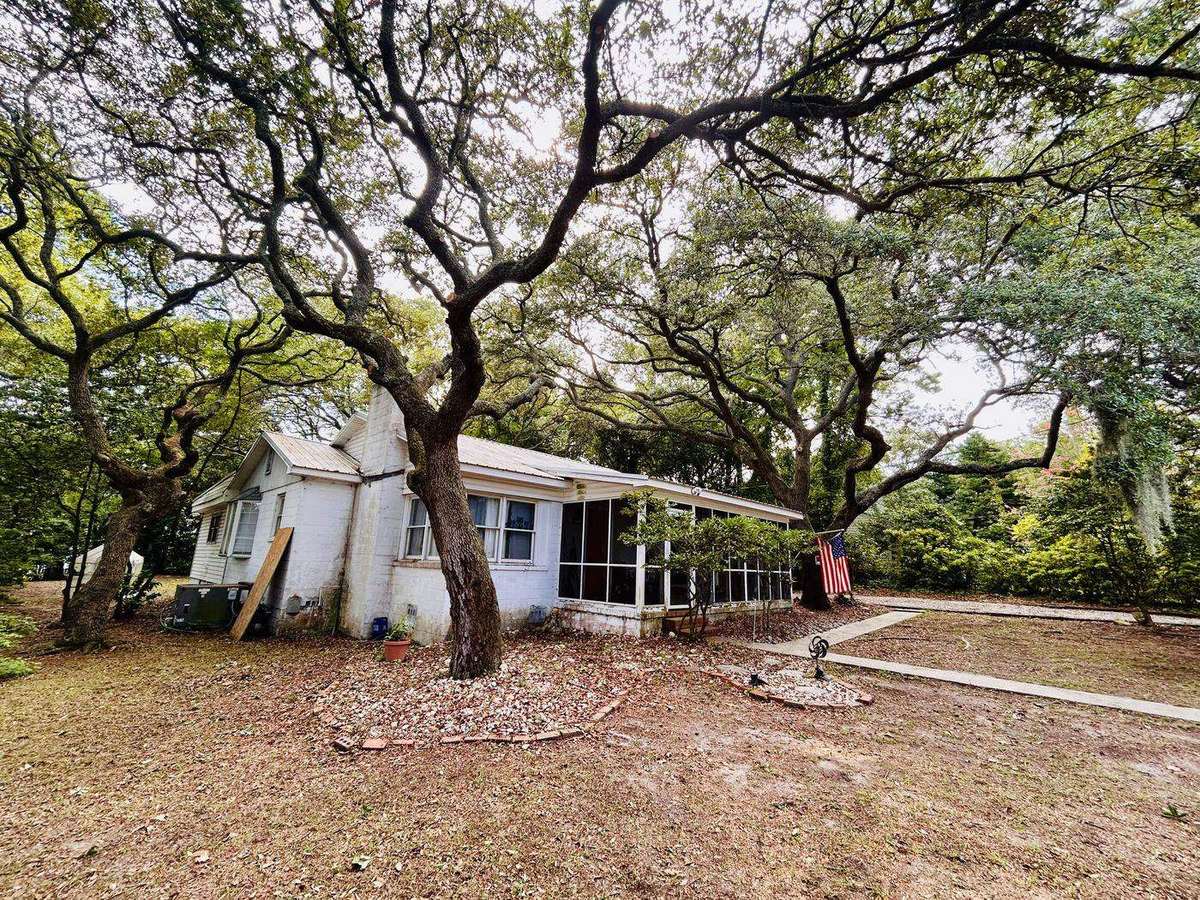
Why live oaks are different
Most trees on the Grand Strand are either fast and short-lived, like water oaks and pines, or ornamental. Live oaks are neither. They grow slowly, they live for centuries, and their wood is among the strongest of any tree in North America. A live oak in your yard was probably there before the house and, if nobody ruins it, will be there after the house is gone.
They are also built for this coast. Salt wind that kills other trees just shapes a live oak lower and wider. Hurricane-force wind that snaps pines bends a live oak and lets go. Their long, low, horizontal limbs are what make them beautiful and what make them a maintenance question over a roof.
So the goal with a live oak is never to change it. It is to keep it healthy, keep it off the house, and stay out of its way.
The best time of year
Late winter, roughly January through early March, is the ideal window for structural pruning. The tree is at its slowest. It is about to push new growth, so cuts seal quickly once spring arrives. Live oaks drop their old leaves in early spring as the new ones come in, so a winter cut also means you are not looking at a thinned canopy for long.
Late spring, before hurricane season starts in June, is the practical window for storm preparation. Deadwood out, weight off the ends of the long limbs over the house, clearance above the roof. If the winter window got away from you, this is the second-best time and it is aimed at the right problem.
Any time of year is fine for removing deadwood and hazard limbs. A dead limb over the driveway does not care what month it is. Neither does a limb rubbing the shingles. Take those out when you see them.
Avoid heavy pruning in the heat of July and August. The tree is under stress from heat and often drought, and big cuts then cost it more. Light work is fine. Taking a third of the canopy off in August is not.
What actually needs to come out
A live oak that has been looked after needs surprisingly little. When we prune one, we are looking for five things.
- Deadwood. Every mature oak carries dead limbs. They are the first thing down in a storm and they fall on calm days too. This is the single most useful cut.
- Clearance. Limbs on or near the roof, the gutters, the chimney, the driveway, and the power drop. Lifted enough that they stay clear for a few years of growth.
- End weight on long limbs. Live oak limbs reach a long way out horizontally, and the weight at the end is what tears them out of the trunk in wind. Reducing the ends by a modest amount, cut back to a side branch, takes that risk down without changing the look of the tree.
- Crossing and rubbing limbs. Two limbs wearing a wound into each other. One of them goes.
- Sprouts and suckers from old cuts or along the trunk, which are weakly attached and steal energy.
That is it. If someone proposes removing a quarter of a healthy live oak's canopy, ask why. The right answer for most trees is a lot less.
The two mistakes that ruin a live oak
Topping
Cutting the top out of a tree, or cutting big limbs back to stubs, to make it shorter or "safer." It does the opposite. The stubs cannot seal, so they rot back into the tree. The tree responds by throwing out dozens of weak, fast-growing sprouts from around each cut, and within a few years those sprouts are big, poorly attached, and far more likely to come down on the roof than the limb that was removed. A topped live oak is a tree with a permanent structural problem. If yours was topped in the past, it can be improved over several seasons of careful work, but it will never be what it was.
Lion-tailing
Stripping all the inner growth off a limb and leaving a tuft of leaves at the end. Crews do it because it is quick and it looks tidy for about a season. It moves all the weight and all the wind load to the very end of the limb, exactly where you do not want it, and it removes the inner growth the tree uses to feed and thicken the limb. Lion-tailed limbs snap. If you have seen a live oak with long bare limbs and pom-poms at the ends, that is what happened to it.
We do neither. Every cut is made at a branch collar or back to a side branch big enough to take over, and the shape of the tree when we leave is the shape it had when we arrived, minus what was dead, rubbing, or over the house.
What about the moss?
Spanish moss and resurrection fern on the limbs are not hurting the tree. They live on the bark and take nothing from it. A live oak covered in moss with a thin canopy is thin for another reason, usually root damage or age, and that is what we would look for. Leave the moss alone.
Roots matter more than limbs
Almost every dying live oak we see on the coast was hurt from below, not above. A driveway poured over the root zone. Soil piled against the trunk. A trench for a septic line, an irrigation system, or a pool cut through the roots on one side. The tree takes years to show it and then declines fast. If you are planning construction anywhere within the spread of a live oak's canopy, call before the equipment shows up. Keeping machines and fill off the roots is cheap. Removing a dead three-hundred-year-old oak is not.
A note on permits
Several towns on the Grand Strand, including Conway and Myrtle Beach, have rules about removing large trees, and live oaks in particular. Pruning is generally not restricted. Removal often is. If someone tells you a healthy live oak needs to come down, get a second opinion and check with your town before scheduling anything.
Getting it done
If you have a live oak over the house in Conway, Myrtle Beach, Murrells Inlet, or anywhere else in Horry County, the best time to call is now for a winter pruning, or in spring before the season starts. Corey will look at the tree, tell you what it needs and what it does not, and give you a price before anything is scheduled. Call or text (843) 927-2499, or read more about how we trim and prune.