
Leaning tree after a storm: remove it, trim it, or leave it?
The wind has passed, the power is back, and there is a tree in your yard that does not look the way it did on Friday. Here is how we decide what to do with it, so you can too.
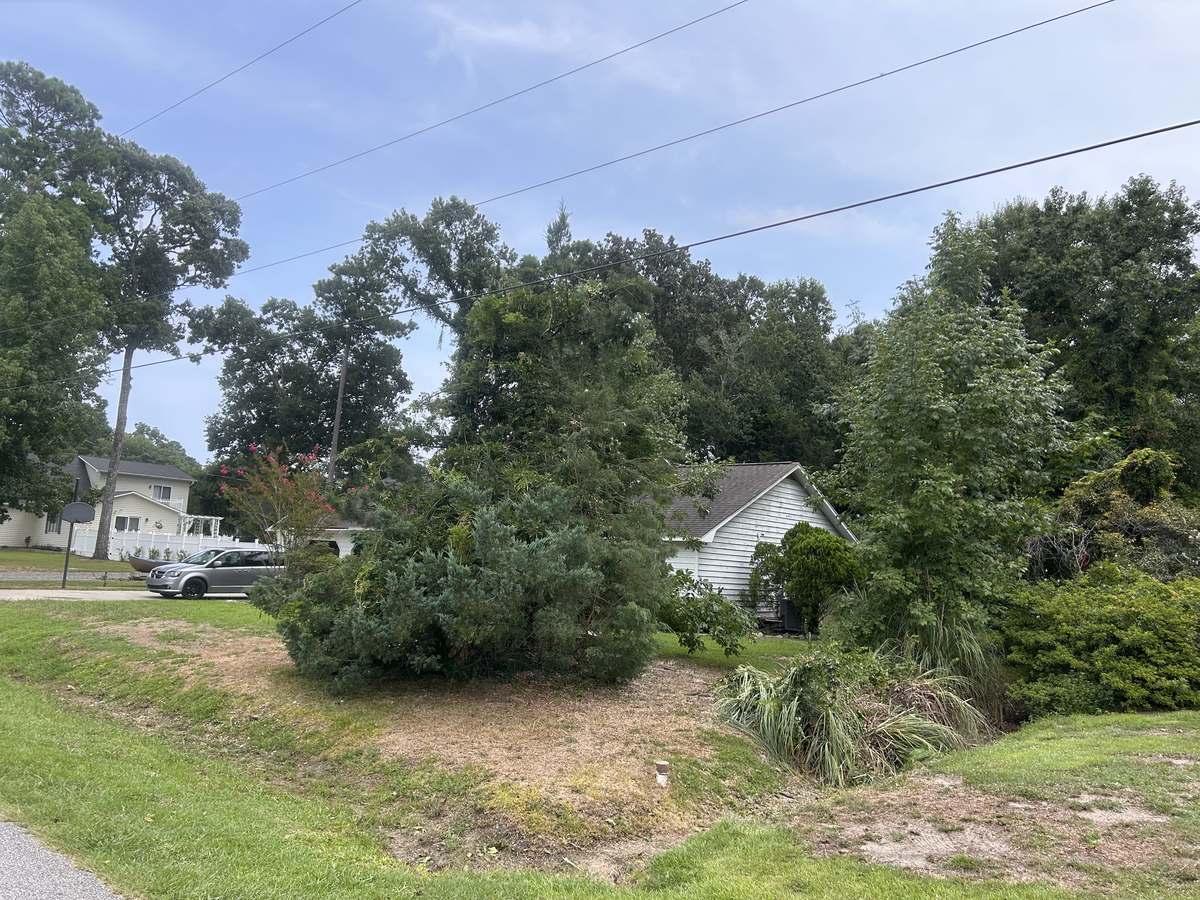
First: is anything touching a power line?
Before you get close to the tree, look up. If any part of it is touching a power line, or a line is down anywhere in the yard, stop. Do not touch the tree, the fence it might be leaning on, or anything metal near it. Call your power company and let them clear the line. Every tree crew on the coast will tell you the same thing: we do not start until the wire is dead or gone.
Second, if the tree is resting on the house, stay out of the rooms under it. A tree on a roof is being held up by the roof, and it can shift.
Once those two are handled, you can start figuring out what kind of problem you have.
Is the lean new?
This is the whole question, and it is the one homeowners get wrong most often, in both directions.
Plenty of trees lean. Live oaks along the coast have been leaning away from the salt wind for a hundred years. A pine that grew toward the light at the edge of the woods has leaned since it was a sapling. A tree with an old lean and a full, healthy canopy is not a problem. It has been standing that way through every storm you have had, and it has grown its roots and its wood to hold that shape.
A new lean is different. If the tree was straight last week and is leaning today, the roots have moved. Walk to the base and look at the ground on the side away from the lean. If the soil is cracked, humped up, or you can see roots that were underground before, the root plate has started to lift. That tree is partly uprooted. It is not going to settle back. It will finish falling in the next strong wind, or on a calm day when the soil dries and shifts. It needs to come down, and the sooner the better.
What if you are not sure whether the lean is new? Check old photos of the yard. Look at whether the trunk is straight and the whole tree is tilted, which points to root failure, or whether the trunk curves and the tree has clearly grown that way, which points to an old lean. When in doubt, call and we will look.
Is the trunk split?
Look at the main trunk, especially where two big limbs or two trunks meet in a V. Storms open those unions up. A fresh crack there, one that you can see into or that opens and closes when the wind moves the tree, means the union has failed. Half the tree is now attached by fibers instead of wood. This is a removal or, at best, a very heavy reduction of the failed side, and it needs to happen before the next storm finishes it.
A crack lower on the trunk, or a section of bark torn off where a limb ripped out, is worth a look but is often survivable. Trees seal over wounds. What they cannot do is grow back a broken union.
Broken limbs still hanging in the tree
These are called hangers, and they are the most common storm damage and the most dangerous to ignore. A limb that snapped but is still caught in the canopy will come down eventually, and it does not need wind to do it. Keep cars, kids, and pets out from under it.
The good news is that hangers are a pruning job, not a removal. A climber removes the broken limb and cuts the tear back to the branch collar, the swollen ring where the limb meets the trunk, so the tree can seal over the wound. Done right, the tree is fine. Left alone, the ragged tear rots back into the trunk over the next few years.
How much of the canopy is gone?
Step back and look at the whole tree. If a storm took a limb or two out of a big oak, the tree will not miss them. If it took the top out of a pine, that pine is going to struggle. If more than about a third of the canopy is gone, or the top is gone from a tree that only grows from the top like a pine, the tree may not recover. It might live for a few years, dropping more deadwood each season, before it dies standing. Corey will tell you honestly whether it is worth keeping.
So: remove, trim, or leave it?
- Remove if the lean is new, the roots have lifted, the trunk or a main union is split, or the tree has lost most of its top. These trees are already on their way down.
- Trim if the tree is standing straight with its roots in the ground and the damage is broken or hanging limbs. Get the hangers out and the tears cleaned up, and the tree is fine.
- Leave it if the lean is old, the canopy is full, and nothing is cracked or hanging. Then use the storm as a reminder: deadwood out and weight off the limbs over the house before the next season.
A word about insurance
Homeowners policies often cover removing a tree that fell on a covered structure, meaning the house, garage, fence, or shed, and sometimes debris removal up to a limit. A tree that fell in the yard and hit nothing is covered less often, and a tree that is leaning but has not fallen is almost never covered until it does. Read your policy or call your agent. We provide a written invoice that describes the work, and we will take photos before we start if you need them for a claim.
What we do when we get there
We look at the tree you called about, and then we look at every other tree on the property. Storms damage more than what fell. A pine with a fresh crack, an oak with a limb that split but did not drop, a cedar that leans two degrees more than it did: we will point them out and tell you which ones matter. You decide. Most of the time the answer is a small pruning job now instead of a tree on the house in October.
If you have a tree that does not look right after a storm anywhere in Conway, Myrtle Beach, or the rest of Horry County, call or text (843) 927-2499 and describe what you see. A photo helps. Read more about how we handle storm damage cleanup.